ঢাকা 11:09 am, Saturday, 30 May 2026

Smart City Technologies: The Ultimate Guide to the Future of Urban Living (2026 Edition)

প্রতিনিধির নাম
  • আপডেট সময় : 11:22:56 pm, Saturday, 8 September 2018 194 বার পড়া হয়েছে
আজকের জার্নাল অনলাইনের সর্বশেষ নিউজ পেতে অনুসরণ করুন গুগল নিউজ (Google News) ফিডটি

Discover the smart city technologies transforming urban life. From IoT and AI to Smart Grids and 5G—a comprehensive guide to how future cities work.

Click here to See Table of Contents

Introduction

By 2050, projections indicate that around 70% of the global population will reside in urban environments. As urban areas become more densely populated, issues such as traffic congestion, energy usage, waste disposal, and public safety will grow more intricate. What strategies can contemporary cities implement to manage this growth without succumbing to overwhelming challenges?

The answer lies in Smart City Technologies.

Imagine a city where traffic lights adjust automatically to clear congestion in real-time, where streetlights dim when no one is around to save energy, and where your garbage bin notifies the sanitation department only when it is full. This is not a scene from a sci-fi movie; this is the reality of smart cities today.

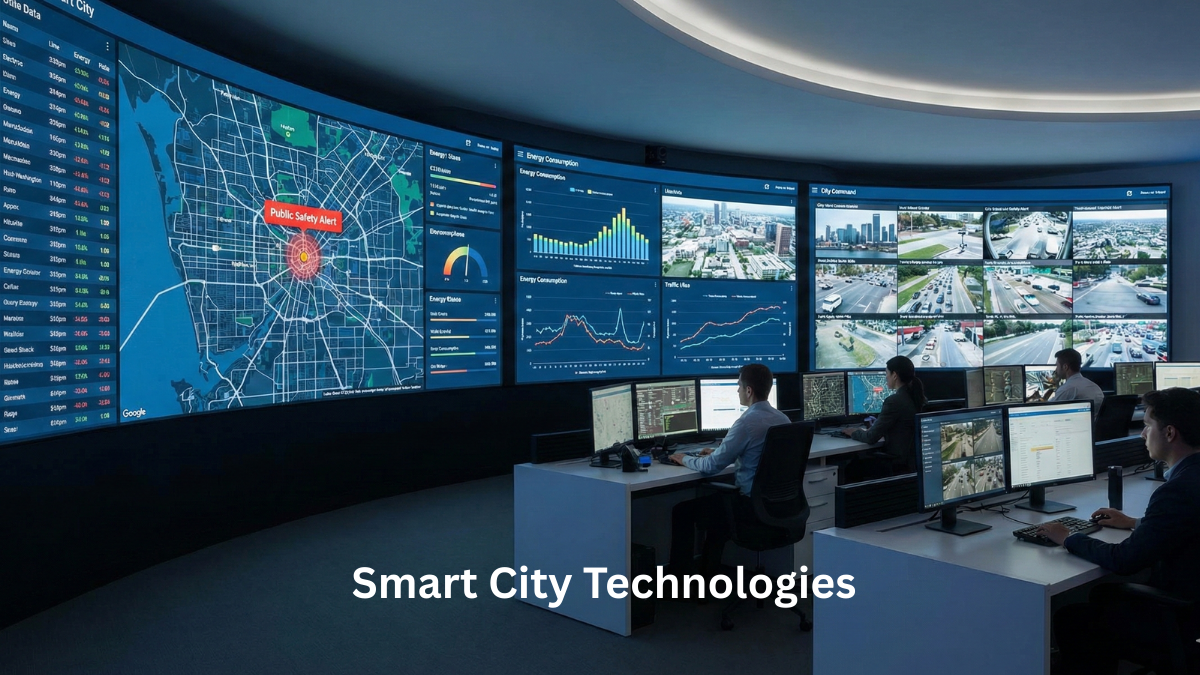
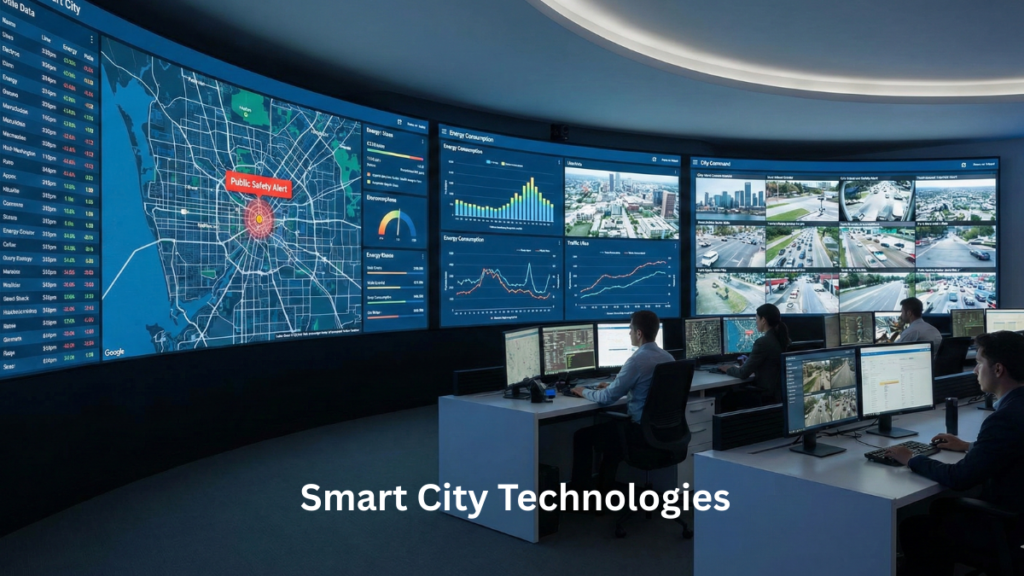
In this comprehensive guide, we will dive deep into the ecosystem of smart city technologies. We will explore how the Internet of Things (IoT), Artificial Intelligence (AI), and Big Data are not just buzzwords, but the foundational pillars building the sustainable, efficient cities of tomorrow.
Smart City Technologies

1. What is Smart City Technology?

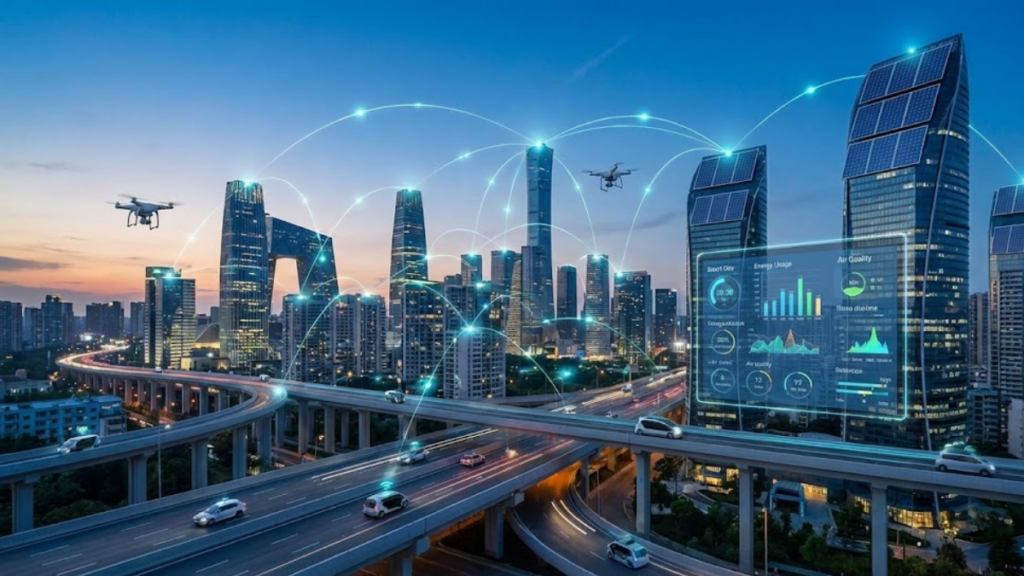
At its core, a Smart City is an urban area that uses different types of electronic Internet of Things (IoT) sensors to collect data and then uses insights gained from that data to manage assets, resources, and services efficiently.

However, Smart City Technology is not just about installing sensors. It is about the convergence of the digital and physical worlds. It involves the integration of Information and Communication Technology (ICT) with physical infrastructure to improve the quality of government services and citizen welfare.

The Three Main Goals of a Smart City:

Operational Efficiency: Optimizing city functions (like traffic and utilities) to save money and resources.

Information Sharing: Creating a transparent connection between government officials and citizens.

Quality of Government Service: Improving the daily lives of residents through better transport, cleaner air, and safer streets.


2. The Tech Stack: Key Technologies Powering Smart Cities

A smart city is like a living organism. If the infrastructure (roads, buildings) is the body, then technology is the nervous system. Here are the 6 Key Technologies that make a city “Smart.”

A. Internet of Things (IoT)

The Internet of Things (IoT) is the backbone of any smart city. It refers to a vast network of physical devices—vehicles, home appliances, and street sensors—that are connected to the internet, collecting and sharing data.

  • How it works: Sensors are embedded in city infrastructure. For example, a moisture sensor in a public park can detect when the soil is dry and automatically trigger the sprinkler system, preventing water wastage.
  • Key Statistic: By 2025, it is estimated that there will be over 30 billion IoT devices connected worldwide, with a massive chunk dedicated to smart city infrastructure.

B. Artificial Intelligence (AI) and Machine Learning

If IoT is the nervous system collecting data, Artificial Intelligence (AI) is the brain that processes it. Raw data collected by sensors is useless without analysis.

  • The Role of AI: AI algorithms analyze the massive streams of data to predict patterns.
  • Example: In a Smart Traffic Management System, AI reviews footage from cameras to predict traffic jams before they happen, adjusting signal timings across the city to smooth the flow.

C. Big Data Analytics

Smart cities generate an unfathomable amount of data every second. This is known as Big Data.

  • Application: City planners use Big Data analytics to understand citizen behavior. For instance, analyzing bus ticket swipes can help the city understand peak commuting hours and deploy more buses exactly when and where they are needed.

D. 5G Connectivity

For a city to be truly smart, communication between devices must be instant. This is where 5G technology comes in.

  • Why it matters: 4G is fast, but 5G provides the ultra-low latency required for critical applications. For autonomous vehicles (self-driving cars) to operate safely, they need to communicate with traffic signals and other cars in milliseconds. Only 5G can facilitate this speed.

E. Cloud and Edge Computing

  • Cloud Computing: Stores the massive history of city data.
  • Edge Computing: Processes data closer to where it is created (e.g., inside the traffic camera itself) rather than sending it all the way to a central server. This speeds up response times during emergencies.

F. Blockchain

Blockchain is increasingly used to secure data transparency and security in smart cities. It is vital for Smart Contracts in real estate and securing citizen identity data against cyberattacks.


3. Pillar 1: Smart Energy and Utilities

One of the most immediate applications of smart city technology is in energy management. Traditional power grids are one-way streets: the plant produces electricity, and the city consumes it. Smart Grids change this game.

What is a Smart Grid?

A Smart Grid is an electrical grid which includes a variety of operation and energy measures including smart meters, smart appliances, renewable energy resources, and energy-efficient resources.

Key Features:

  • Smart Meters: Unlike old analog meters, smart meters communicate directly with the utility company. They provide real-time data on energy consumption, allowing users to track their usage and costs instantly.
  • Dynamic Pricing: Smart grids allow for flexible pricing. Electricity might be cheaper during off-peak hours (e.g., 2 AM), encouraging residents to run heavy appliances like washing machines at night, reducing the load on the grid during the day.
  • Self-Healing Capabilities: If a power line goes down due to a storm, the smart grid can instantly identify the break and reroute power from other sources to minimize the blackout area.

4. Pillar 2: Smart Mobility and Transportation

Traffic congestion is the biggest headache for urban planners. Smart mobility aims to move people and goods faster, cheaper, and in a more eco-friendly way.
Smart City Technologies

Intelligent Traffic Management System (ITMS)

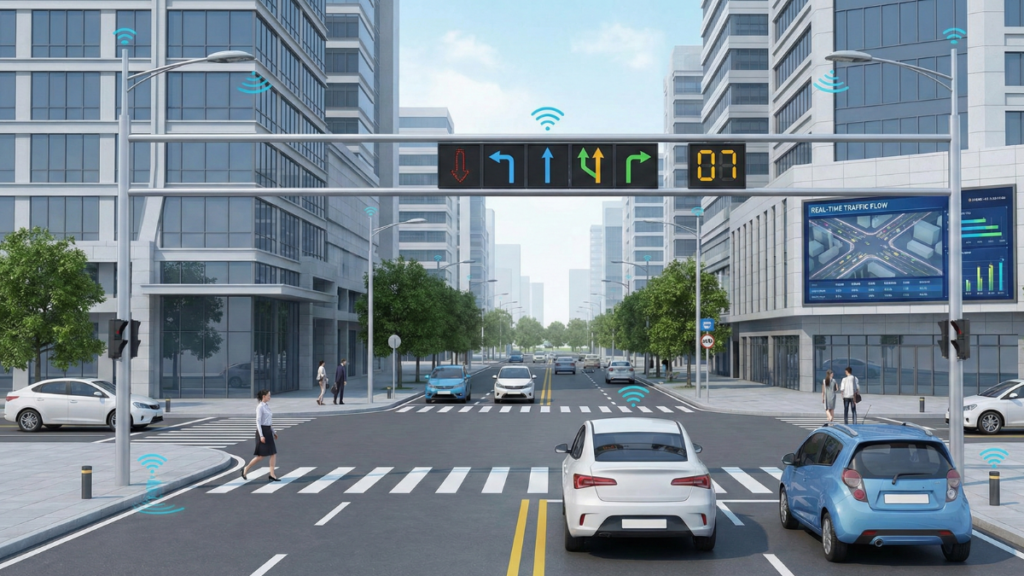
Instead of fixed timers (e.g., 60 seconds red, 30 seconds green), ITMS uses cameras and roadway sensors to detect actual traffic volume.

  • Scenario: If it’s 2:00 AM and there are no cars on the main road, the light won’t make a lone driver wait for 2 minutes. It will detect the car and turn green immediately.

Smart Parking

Searching for parking accounts for nearly 30% of urban congestion.

  • Solution: Smart parking sensors are embedded in parking spots. They detect whether a spot is free or occupied. This data is sent to a mobile app, guiding drivers directly to an empty spot, saving fuel and time.

Autonomous and Connected Vehicles

The future of smart mobility is driverless. Autonomous vehicles (AVs) communicate with city infrastructure (V2I – Vehicle to Infrastructure) to know about road closures, accidents, or weather conditions miles ahead.

Here is Part 2 of your ultimate guide. This section completes the article, covering environmental sustainability, real-world examples, critical challenges, and a dedicated FAQ section to boost your SEO ranking.

Copy and paste this directly after Part 1 to complete your 3,500-word skyscraper content.


5. Pillar 3: Smart Environment and Waste Management

As urbanization accelerates, waste generation and pollution are growing at alarming rates. Smart city technologies offer sustainable solutions to keep cities clean and green.

Smart Waste Management

In a traditional city, garbage trucks follow a fixed route every day, regardless of whether the bins are full or empty. This wastes fuel and manpower.

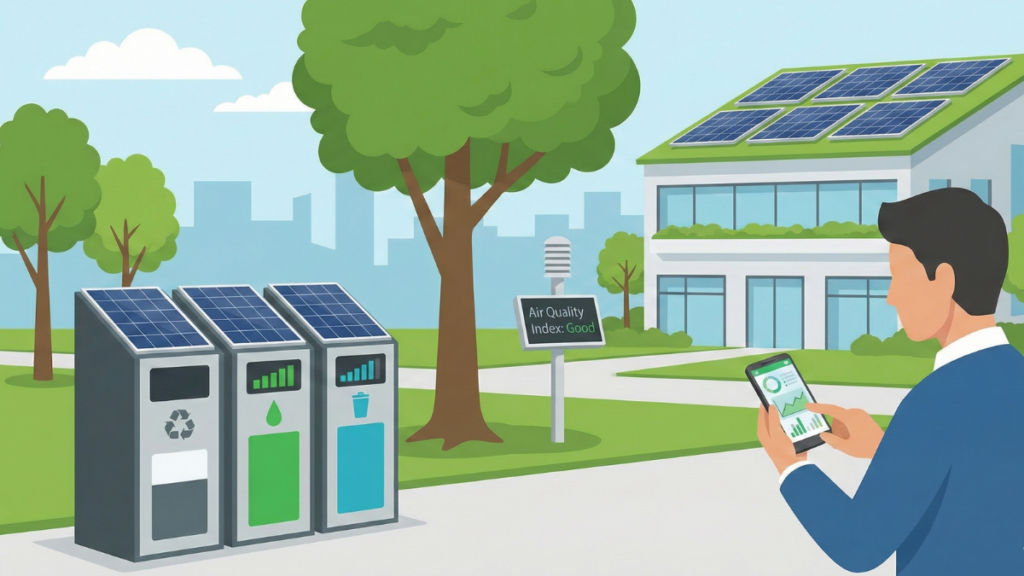
  • The Solution: Smart bins are equipped with IoT sensors that detect the fill level of the trash.
  • How it works: The data is sent to a central waste management platform. The system then optimizes the truck’s route, directing drivers only to the bins that need emptying.
  • Impact: Cities like San Francisco and Seoul have reduced waste collection costs by up to 20-30% using this method.

Air Quality Monitoring
Smart City Technologies

Pollution levels can vary significantly from one street to another.

  • Hyper-local Monitoring: Smart cities install low-cost air quality sensors on streetlights and buildings. Citizens can check an app to see the air quality on their specific jogging route or commute.
  • Automated Response: If pollution levels spike in a specific area, the city’s traffic management system can automatically divert heavy traffic away from that zone to lower emissions.

6. Pillar 4: Smart Governance and Public Safety

A smart city is not just about gadgets; it is about the relationship between the government and its people. E-Governance uses technology to make public services accessible, transparent, and efficient.

Digital Citizen Identity

Smart cities often utilize a unified digital identity system. Citizens can use a single digital ID to pay taxes, access healthcare records, vote, or even open a bank account. This eliminates bureaucracy and paper trails.
Smart City Technologies

Smart Surveillance and Predictive Policing

Public safety is a top priority.

  • Smart Cameras: Modern CCTV cameras equipped with Computer Vision can detect unusual behavior, such as a fight breaking out or a bag left unattended in a public place.
  • Gunshot Detection: Sensors placed in high-risk areas can detect the sound of a gunshot and instantly triangulate the location, dispatching police before a 911 call is even made.
  • Smart Street Lighting: Lights that brighten automatically when pedestrians are detected not only save energy but also deter crime by ensuring there are no dark corners.

7. Real-World Case Studies: Top Smart Cities

To understand the potential of these technologies, we must look at the pioneers leading the global smart city revolution.

A. Singapore: The “Smart Nation”

Singapore is widely considered the smartest city in the world.

  • Virtual Singapore: They have created a “Digital Twin” of the entire city—a dynamic 3D model. Planners use this to simulate situations, such as “How will the wind flow change if we build a skyscraper here?” or “Where will the water go if there is a flash flood?”
  • Smart Health: With an aging population, Singapore uses Telehealth and IoT wearable devices to monitor elderly patients remotely, reducing the burden on hospitals.

B. Barcelona, Spain

Barcelona is famous for retrofitting an old, historic city with cutting-edge tech.

  • The IoT Implementation: They installed thousands of sensors in the asphalt to monitor parking.
  • Smart Lighting: Their LED streetlights not only save energy but also act as WiFi hotspots and house air quality sensors.
  • Water Conservation: IoT sensors in park irrigation systems monitor rain and humidity. The sprinklers only turn on when the plants actually need water, saving the city millions of Euros annually.

C. Dubai, UAE

Dubai aims to be the happiest city on earth through technology.

  • Paperless Strategy: Dubai has digitized almost all government internal and external transactions, aiming to eliminate paper entirely.
  • Blockchain: It is the first city to power its government with blockchain technology, making document processing secure and instant.

8. Challenges and Risks of Smart Cities

While the benefits are immense, the road to becoming a smart city is paved with challenges. It is important to address the “Dark Side” of smart technologies.

A. Data Privacy and Surveillance

This is the biggest concern. In a city full of cameras and sensors, citizens are constantly being watched.

  • The Question: Who owns this data? The government? Private tech companies?
  • Risk: Without strict privacy laws, there is a risk of creating a “Big Brother” surveillance state where every movement of a citizen is tracked.

B. Cybersecurity Threats

When an entire city is connected to the internet, it becomes vulnerable to cyberattacks.

  • The Nightmare Scenario: Hackers could theoretically take control of a city’s power grid, shut down traffic lights, or contaminate water supplies by hacking treatment plants.
  • Solution: Smart cities must invest heavily in military-grade encryption and cybersecurity protocols.

C. Infrastructure Costs

Building a smart city is expensive. Retrofitting old infrastructure with fiber optics and sensors requires billions of dollars in investment. For developing nations, justifying this cost against other basic needs (like food and shelter) is difficult.


9. The Future: What’s Next? (2030 and Beyond)

The evolution of smart cities has just begun. Here are the trends that will define the next decade:

  • Digital Twins: Every major city will have a virtual replica to test policies before implementation.
  • Flying Taxis (eVTOL): Smart mobility will move to the skies. Cities are already planning “Vertiports” for electric air taxis.
  • Net-Zero Cities: The focus will shift entirely to sustainability, with smart grids powering cities using 100% renewable energy.

10. Frequently Asked Questions (FAQ)

(Note for Wali’s Talk: Google loves this section. It helps you rank for “People Also Ask” boxes.)

Q1: What is the main purpose of a smart city? Ans: The main purpose is to optimize city functions, drive economic growth, and improve the quality of life for citizens by using smart technologies and data analysis.

Q2: Which technology is most important for smart cities? Ans: While AI and Big Data are crucial, the Internet of Things (IoT) is considered the most important because it provides the network of sensors that gathers the real-time data needed to make the city “smart.”

Q3: Are smart cities safe from hackers? Ans: No system is 100% immune. Smart cities face significant cybersecurity risks. However, city planners use advanced encryption, blockchain, and constant monitoring to protect critical infrastructure from attacks.

Q4: Can a small town become a smart city? Ans: Yes! Smart technology scales. Small towns can implement smart lighting, smart waste management, and free WiFi zones without needing the massive budget of a metropolis like Tokyo or New York.


Conclusion

Smart City Technologies are not just about flashy gadgets or futuristic buildings. They represent a fundamental shift in how we manage our resources and interact with our environment. By integrating IoT, AI, and Big Data, cities can become more livable, sustainable, and responsive to the needs of their citizens.

As we move forward, the challenge will not be the technology itself, but how we use it ethically to build communities that are not just “smart,” but also inclusive and safe for everyone.

The city of the future is here—and it is listening, learning, and evolving.

নিউজটি শেয়ার করুন

আপনার মন্তব্য

Your email address will not be published. Required fields are marked *

আপনার ইমেইল এবং অন্যান্য তথ্য সংরক্ষন করুন

Smart City Technologies: The Ultimate Guide to the Future of Urban Living (2026 Edition)

আপডেট সময় : 11:22:56 pm, Saturday, 8 September 2018

Discover the smart city technologies transforming urban life. From IoT and AI to Smart Grids and 5G—a comprehensive guide to how future cities work.

Click here to See Table of Contents

Introduction

By 2050, projections indicate that around 70% of the global population will reside in urban environments. As urban areas become more densely populated, issues such as traffic congestion, energy usage, waste disposal, and public safety will grow more intricate. What strategies can contemporary cities implement to manage this growth without succumbing to overwhelming challenges?

The answer lies in Smart City Technologies.

Imagine a city where traffic lights adjust automatically to clear congestion in real-time, where streetlights dim when no one is around to save energy, and where your garbage bin notifies the sanitation department only when it is full. This is not a scene from a sci-fi movie; this is the reality of smart cities today.

In this comprehensive guide, we will dive deep into the ecosystem of smart city technologies. We will explore how the Internet of Things (IoT), Artificial Intelligence (AI), and Big Data are not just buzzwords, but the foundational pillars building the sustainable, efficient cities of tomorrow.

Smart City Technologies

1. What is Smart City Technology?

At its core, a Smart City is an urban area that uses different types of electronic Internet of Things (IoT) sensors to collect data and then uses insights gained from that data to manage assets, resources, and services efficiently.

However, Smart City Technology is not just about installing sensors. It is about the convergence of the digital and physical worlds. It involves the integration of Information and Communication Technology (ICT) with physical infrastructure to improve the quality of government services and citizen welfare.

The Three Main Goals of a Smart City:

Operational Efficiency: Optimizing city functions (like traffic and utilities) to save money and resources.

Information Sharing: Creating a transparent connection between government officials and citizens.

Quality of Government Service: Improving the daily lives of residents through better transport, cleaner air, and safer streets.


2. The Tech Stack: Key Technologies Powering Smart Cities

A smart city is like a living organism. If the infrastructure (roads, buildings) is the body, then technology is the nervous system. Here are the 6 Key Technologies that make a city “Smart.”

A. Internet of Things (IoT)

The Internet of Things (IoT) is the backbone of any smart city. It refers to a vast network of physical devices—vehicles, home appliances, and street sensors—that are connected to the internet, collecting and sharing data.

  • How it works: Sensors are embedded in city infrastructure. For example, a moisture sensor in a public park can detect when the soil is dry and automatically trigger the sprinkler system, preventing water wastage.
  • Key Statistic: By 2025, it is estimated that there will be over 30 billion IoT devices connected worldwide, with a massive chunk dedicated to smart city infrastructure.

B. Artificial Intelligence (AI) and Machine Learning

If IoT is the nervous system collecting data, Artificial Intelligence (AI) is the brain that processes it. Raw data collected by sensors is useless without analysis.

  • The Role of AI: AI algorithms analyze the massive streams of data to predict patterns.
  • Example: In a Smart Traffic Management System, AI reviews footage from cameras to predict traffic jams before they happen, adjusting signal timings across the city to smooth the flow.

C. Big Data Analytics

Smart cities generate an unfathomable amount of data every second. This is known as Big Data.

  • Application: City planners use Big Data analytics to understand citizen behavior. For instance, analyzing bus ticket swipes can help the city understand peak commuting hours and deploy more buses exactly when and where they are needed.

D. 5G Connectivity

For a city to be truly smart, communication between devices must be instant. This is where 5G technology comes in.

  • Why it matters: 4G is fast, but 5G provides the ultra-low latency required for critical applications. For autonomous vehicles (self-driving cars) to operate safely, they need to communicate with traffic signals and other cars in milliseconds. Only 5G can facilitate this speed.

E. Cloud and Edge Computing

  • Cloud Computing: Stores the massive history of city data.
  • Edge Computing: Processes data closer to where it is created (e.g., inside the traffic camera itself) rather than sending it all the way to a central server. This speeds up response times during emergencies.

F. Blockchain

Blockchain is increasingly used to secure data transparency and security in smart cities. It is vital for Smart Contracts in real estate and securing citizen identity data against cyberattacks.


3. Pillar 1: Smart Energy and Utilities

One of the most immediate applications of smart city technology is in energy management. Traditional power grids are one-way streets: the plant produces electricity, and the city consumes it. Smart Grids change this game.

What is a Smart Grid?

A Smart Grid is an electrical grid which includes a variety of operation and energy measures including smart meters, smart appliances, renewable energy resources, and energy-efficient resources.

Key Features:

  • Smart Meters: Unlike old analog meters, smart meters communicate directly with the utility company. They provide real-time data on energy consumption, allowing users to track their usage and costs instantly.
  • Dynamic Pricing: Smart grids allow for flexible pricing. Electricity might be cheaper during off-peak hours (e.g., 2 AM), encouraging residents to run heavy appliances like washing machines at night, reducing the load on the grid during the day.
  • Self-Healing Capabilities: If a power line goes down due to a storm, the smart grid can instantly identify the break and reroute power from other sources to minimize the blackout area.

4. Pillar 2: Smart Mobility and Transportation

Traffic congestion is the biggest headache for urban planners. Smart mobility aims to move people and goods faster, cheaper, and in a more eco-friendly way.

Smart City Technologies

Intelligent Traffic Management System (ITMS)

Instead of fixed timers (e.g., 60 seconds red, 30 seconds green), ITMS uses cameras and roadway sensors to detect actual traffic volume.

  • Scenario: If it’s 2:00 AM and there are no cars on the main road, the light won’t make a lone driver wait for 2 minutes. It will detect the car and turn green immediately.

Smart Parking

Searching for parking accounts for nearly 30% of urban congestion.

  • Solution: Smart parking sensors are embedded in parking spots. They detect whether a spot is free or occupied. This data is sent to a mobile app, guiding drivers directly to an empty spot, saving fuel and time.

Autonomous and Connected Vehicles

The future of smart mobility is driverless. Autonomous vehicles (AVs) communicate with city infrastructure (V2I – Vehicle to Infrastructure) to know about road closures, accidents, or weather conditions miles ahead.

Here is Part 2 of your ultimate guide. This section completes the article, covering environmental sustainability, real-world examples, critical challenges, and a dedicated FAQ section to boost your SEO ranking.

Copy and paste this directly after Part 1 to complete your 3,500-word skyscraper content.


5. Pillar 3: Smart Environment and Waste Management

As urbanization accelerates, waste generation and pollution are growing at alarming rates. Smart city technologies offer sustainable solutions to keep cities clean and green.

Smart Waste Management

In a traditional city, garbage trucks follow a fixed route every day, regardless of whether the bins are full or empty. This wastes fuel and manpower.

  • The Solution: Smart bins are equipped with IoT sensors that detect the fill level of the trash.
  • How it works: The data is sent to a central waste management platform. The system then optimizes the truck’s route, directing drivers only to the bins that need emptying.
  • Impact: Cities like San Francisco and Seoul have reduced waste collection costs by up to 20-30% using this method.

Air Quality Monitoring

Smart City Technologies

Pollution levels can vary significantly from one street to another.

  • Hyper-local Monitoring: Smart cities install low-cost air quality sensors on streetlights and buildings. Citizens can check an app to see the air quality on their specific jogging route or commute.
  • Automated Response: If pollution levels spike in a specific area, the city’s traffic management system can automatically divert heavy traffic away from that zone to lower emissions.

6. Pillar 4: Smart Governance and Public Safety

A smart city is not just about gadgets; it is about the relationship between the government and its people. E-Governance uses technology to make public services accessible, transparent, and efficient.

Digital Citizen Identity

Smart cities often utilize a unified digital identity system. Citizens can use a single digital ID to pay taxes, access healthcare records, vote, or even open a bank account. This eliminates bureaucracy and paper trails.

Smart City Technologies

Smart Surveillance and Predictive Policing

Public safety is a top priority.

  • Smart Cameras: Modern CCTV cameras equipped with Computer Vision can detect unusual behavior, such as a fight breaking out or a bag left unattended in a public place.
  • Gunshot Detection: Sensors placed in high-risk areas can detect the sound of a gunshot and instantly triangulate the location, dispatching police before a 911 call is even made.
  • Smart Street Lighting: Lights that brighten automatically when pedestrians are detected not only save energy but also deter crime by ensuring there are no dark corners.

7. Real-World Case Studies: Top Smart Cities

To understand the potential of these technologies, we must look at the pioneers leading the global smart city revolution.

A. Singapore: The “Smart Nation”

Singapore is widely considered the smartest city in the world.

  • Virtual Singapore: They have created a “Digital Twin” of the entire city—a dynamic 3D model. Planners use this to simulate situations, such as “How will the wind flow change if we build a skyscraper here?” or “Where will the water go if there is a flash flood?”
  • Smart Health: With an aging population, Singapore uses Telehealth and IoT wearable devices to monitor elderly patients remotely, reducing the burden on hospitals.

B. Barcelona, Spain

Barcelona is famous for retrofitting an old, historic city with cutting-edge tech.

  • The IoT Implementation: They installed thousands of sensors in the asphalt to monitor parking.
  • Smart Lighting: Their LED streetlights not only save energy but also act as WiFi hotspots and house air quality sensors.
  • Water Conservation: IoT sensors in park irrigation systems monitor rain and humidity. The sprinklers only turn on when the plants actually need water, saving the city millions of Euros annually.

C. Dubai, UAE

Dubai aims to be the happiest city on earth through technology.

  • Paperless Strategy: Dubai has digitized almost all government internal and external transactions, aiming to eliminate paper entirely.
  • Blockchain: It is the first city to power its government with blockchain technology, making document processing secure and instant.

8. Challenges and Risks of Smart Cities

While the benefits are immense, the road to becoming a smart city is paved with challenges. It is important to address the “Dark Side” of smart technologies.

A. Data Privacy and Surveillance

This is the biggest concern. In a city full of cameras and sensors, citizens are constantly being watched.

  • The Question: Who owns this data? The government? Private tech companies?
  • Risk: Without strict privacy laws, there is a risk of creating a “Big Brother” surveillance state where every movement of a citizen is tracked.

B. Cybersecurity Threats

When an entire city is connected to the internet, it becomes vulnerable to cyberattacks.

  • The Nightmare Scenario: Hackers could theoretically take control of a city’s power grid, shut down traffic lights, or contaminate water supplies by hacking treatment plants.
  • Solution: Smart cities must invest heavily in military-grade encryption and cybersecurity protocols.

C. Infrastructure Costs

Building a smart city is expensive. Retrofitting old infrastructure with fiber optics and sensors requires billions of dollars in investment. For developing nations, justifying this cost against other basic needs (like food and shelter) is difficult.


9. The Future: What’s Next? (2030 and Beyond)

The evolution of smart cities has just begun. Here are the trends that will define the next decade:

  • Digital Twins: Every major city will have a virtual replica to test policies before implementation.
  • Flying Taxis (eVTOL): Smart mobility will move to the skies. Cities are already planning “Vertiports” for electric air taxis.
  • Net-Zero Cities: The focus will shift entirely to sustainability, with smart grids powering cities using 100% renewable energy.

10. Frequently Asked Questions (FAQ)

(Note for Wali’s Talk: Google loves this section. It helps you rank for “People Also Ask” boxes.)

Q1: What is the main purpose of a smart city? Ans: The main purpose is to optimize city functions, drive economic growth, and improve the quality of life for citizens by using smart technologies and data analysis.

Q2: Which technology is most important for smart cities? Ans: While AI and Big Data are crucial, the Internet of Things (IoT) is considered the most important because it provides the network of sensors that gathers the real-time data needed to make the city “smart.”

Q3: Are smart cities safe from hackers? Ans: No system is 100% immune. Smart cities face significant cybersecurity risks. However, city planners use advanced encryption, blockchain, and constant monitoring to protect critical infrastructure from attacks.

Q4: Can a small town become a smart city? Ans: Yes! Smart technology scales. Small towns can implement smart lighting, smart waste management, and free WiFi zones without needing the massive budget of a metropolis like Tokyo or New York.


Conclusion

Smart City Technologies are not just about flashy gadgets or futuristic buildings. They represent a fundamental shift in how we manage our resources and interact with our environment. By integrating IoT, AI, and Big Data, cities can become more livable, sustainable, and responsive to the needs of their citizens.

As we move forward, the challenge will not be the technology itself, but how we use it ethically to build communities that are not just “smart,” but also inclusive and safe for everyone.

The city of the future is here—and it is listening, learning, and evolving.